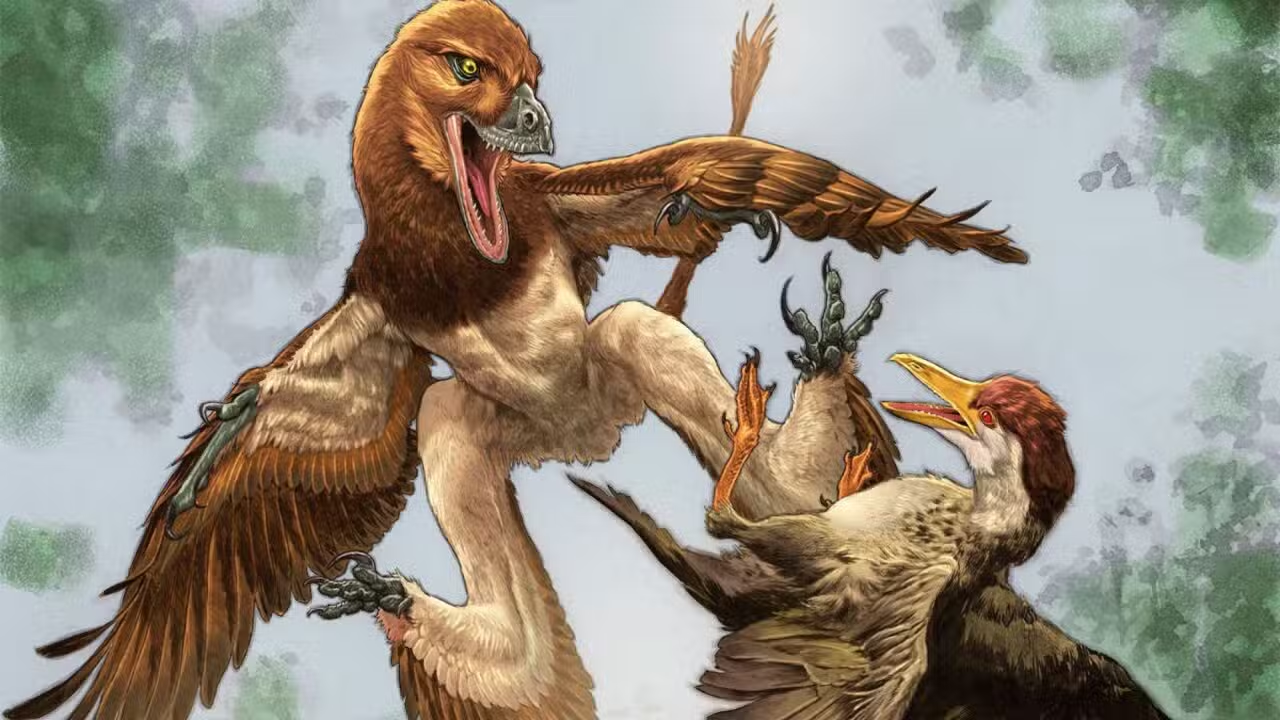
A remarkably preserved dinosaur fossil discovered in northwestern China has led scientists to identify a previously unknown species of microraptor, offering valuable new insights into the evolution of feathered dinosaurs and the origins of flight.
The fossil, estimated to be around 120 million years old, was unearthed in the Changma Basin of Gansu Province, China. Researchers believe the discovery represents a new species within the microraptor family, a group of small predatory dinosaurs known for their feathers and close evolutionary connection to modern birds.
What makes the finding particularly significant is the exceptional condition of the fossil. The preserved remains provide scientists with rare details about the animal’s anatomy, helping researchers better understand how early feathered dinosaurs lived, moved, and evolved.
Microraptors are famous for their unusual four-winged body structure. Unlike modern birds, these dinosaurs possessed long feathers on both their forelimbs and hind limbs, creating a unique wing arrangement that has fascinated paleontologists for years. Many experts believe these adaptations played an important role in the transition from ground-dwelling dinosaurs to creatures capable of gliding or flying.
The newly identified species is expected to provide additional evidence about the diversity of feathered dinosaurs that existed during the Early Cretaceous period. Researchers say discoveries like this help fill important gaps in the fossil record and improve our understanding of evolutionary history.
Scientists have long viewed microraptors as a key link between non-avian dinosaurs and birds. Their feathered bodies, lightweight skeletons, and potential gliding abilities offer clues about how flight-related traits developed over millions of years.
The Changma Basin has become an important site for paleontological research, producing numerous fossils that have expanded scientific knowledge of prehistoric ecosystems. The latest discovery further strengthens the region’s reputation as a valuable source of information about ancient life on Earth.
As researchers continue to study the fossil, they hope it will reveal more details about the behavior, habitat, and evolutionary adaptations of these fascinating creatures. The discovery serves as another reminder that even after millions of years, fossils can still transform our understanding of life’s history.