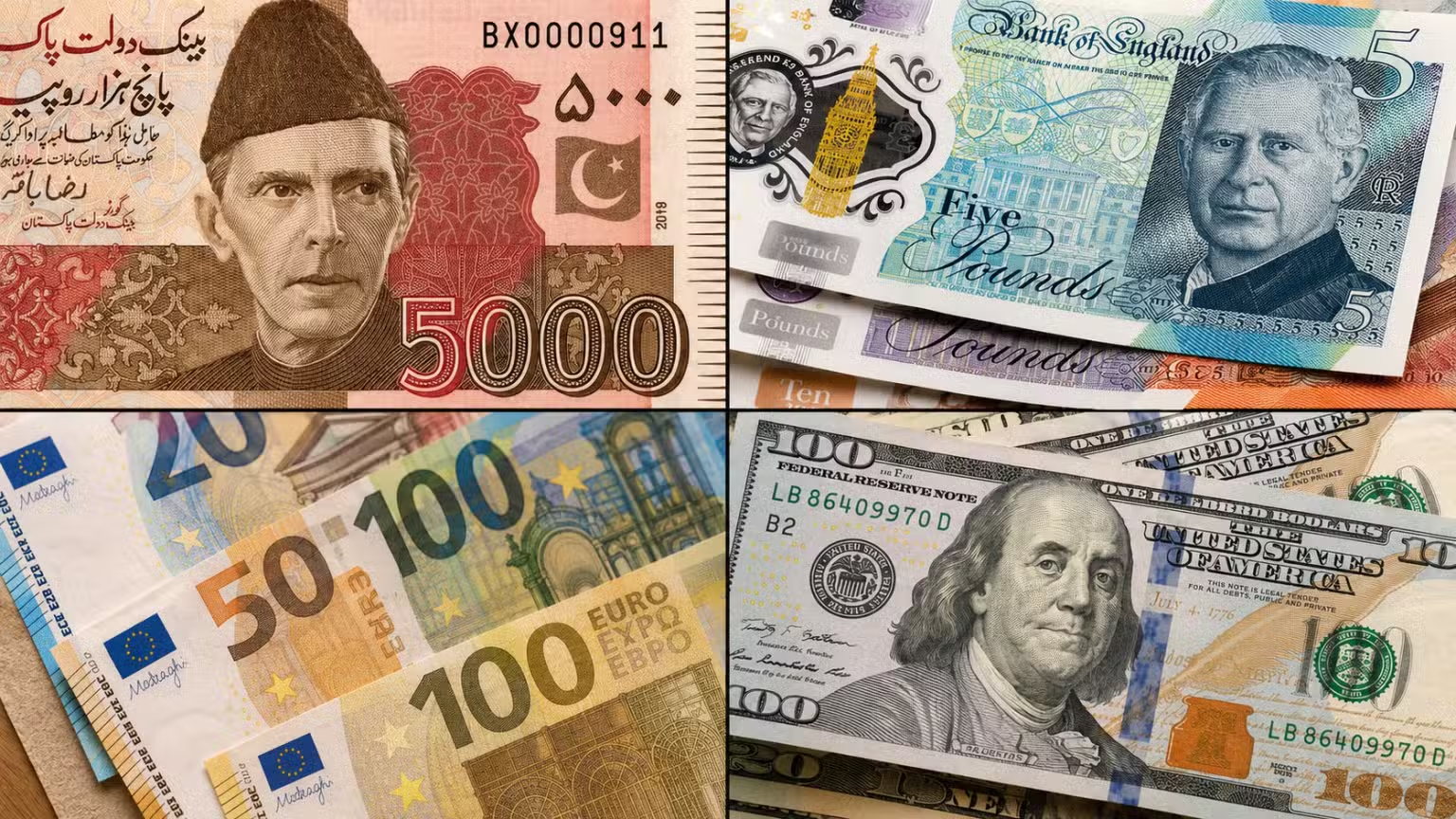
The Pakistani rupee (PKR) posted another modest gain against the US dollar on Monday, extending its positive streak in the interbank market. Despite the improvement against the dollar, the local currency remained under pressure against several other major international currencies, reflecting ongoing movements in the global foreign exchange market.
At the close of trading, the Pakistani rupee settled at Rs277.86 per US dollar, strengthening by one paisa compared to the previous trading session. The latest performance marks the 206th consecutive day that the rupee has ended in positive territory against the US dollar, highlighting its continued stability in the interbank market.
While the appreciation against the dollar was marginal, currency analysts note that exchange rate movements are influenced by multiple factors, including foreign exchange reserves, import demand, export earnings, remittances, inflation, and global financial conditions.
Despite maintaining stability against the US dollar, the rupee reportedly lost ground against several leading international currencies. Fluctuations in currencies such as the British pound, Euro, UAE dirham, and Saudi riyal often occur due to changes in global exchange rates rather than movements in Pakistan’s domestic economy alone.
The US dollar remains the primary benchmark for Pakistan’s international trade and financial transactions. Even small movements in the exchange rate can affect import costs, external debt servicing, and business confidence. However, changes against other major currencies can also influence the prices of imported goods, overseas travel, education expenses, and remittances.
Market experts believe the rupee’s relative stability against the dollar has been supported by improved foreign exchange management, controlled import demand, and steady inflows through exports and workers’ remittances. Nevertheless, global currency markets remain volatile, with international economic developments continuing to influence exchange rate trends.
Businesses that rely on imported raw materials closely monitor currency fluctuations, as changes in exchange rates directly impact production costs and pricing. Similarly, overseas Pakistanis sending remittances and individuals planning foreign travel also keep a close watch on daily currency movements.
Financial analysts expect the rupee’s performance in the coming weeks to depend on key economic indicators, including inflation, foreign exchange reserves, trade figures, and the State Bank of Pakistan’s monetary policy. International market conditions and movements in the US dollar index will also continue to play an important role.
Although the latest gain against the US dollar was relatively small, the continued positive trend demonstrates the rupee’s resilience in the interbank market. At the same time, pressure from stronger global currencies serves as a reminder that Pakistan’s exchange rate remains closely linked to broader international financial developments.