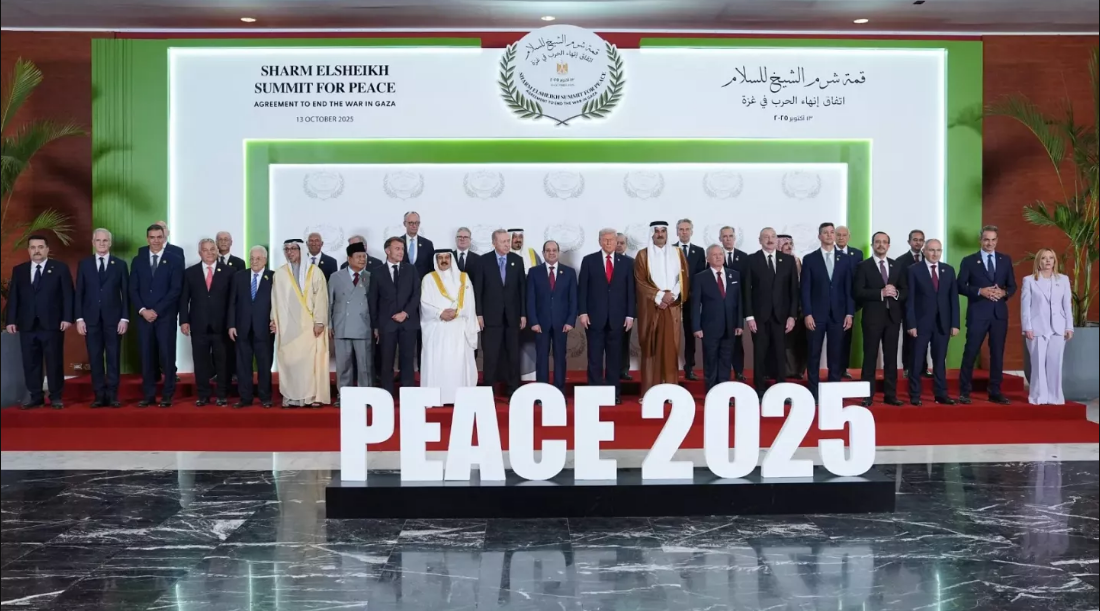
Former US President Donald Trump has once again placed himself at the center of Middle East diplomacy, announcing what he called a “historic dawn of a new Middle East” after brokering a deal to end the devastating two-year war in Gaza. The agreement marks a moment of relief in a region scarred by conflict, yet global analysts question whether Trump’s trademark brash approach can achieve a lasting peace.
The deal echoes past moments of American mediation in the Middle East, drawing comparisons to Bill Clinton’s 1993 Oslo Accord, which brought Israeli and Palestinian leaders together at the White House and initiated a framework for Palestinian self-governance. Yet, while Clinton emphasized detailed negotiation, Trump’s approach has been more direct, driven by political instinct rather than careful diplomacy.
Speaking to reporters after a brief visit to Israel and Egypt, Trump said he would “decide what I think is right” for the Palestinians’ future “in coordination with other states.” He added, “A lot of people like the one-state solution, some people like the two-state solution. We’ll have to see.”
The 20-point plan released by the White House outlines only a vague “credible pathway” toward Palestinian statehood. Critics note that it provides few details on the West Bank, where Israeli settlement expansion has continued, often fueling tensions and violence.
Mona Yacoubian, Director of the Middle East Program at the Center for Strategic and International Studies, described the move as “a short-circuited process.” She argued that while the ceasefire is significant, “without a sustained commitment to an actual solution, the plan risks becoming another temporary fix, much like previous peace efforts that eventually unraveled.”
Despite years of opposing Palestinian statehood, Israeli Prime Minister Benjamin Netanyahu was reportedly pressured by Trump to accept the ceasefire following Israeli strikes targeting Hamas leaders in Qatar. Observers say Trump’s willingness to exert such pressure reflects both his unconventional style and a desire to showcase quick results.
However, seasoned diplomats remain cautious. Ghaith al-Omari, a former Palestinian negotiator, said, “Trump has seized the moment, but there’s little sign of the structured diplomacy required to make this agreement last.” He added that mistrust among regional powers and the aging leadership of Mahmud Abbas, who turns 90 next month, make the path to peace more fragile than ever.
While the Gaza truce brings momentary calm, experts agree that the broader Israeli-Palestinian conflict remains unresolved. Without long-term engagement, the “historic dawn” Trump celebrates may fade before genuine peace takes root in the Middle East.