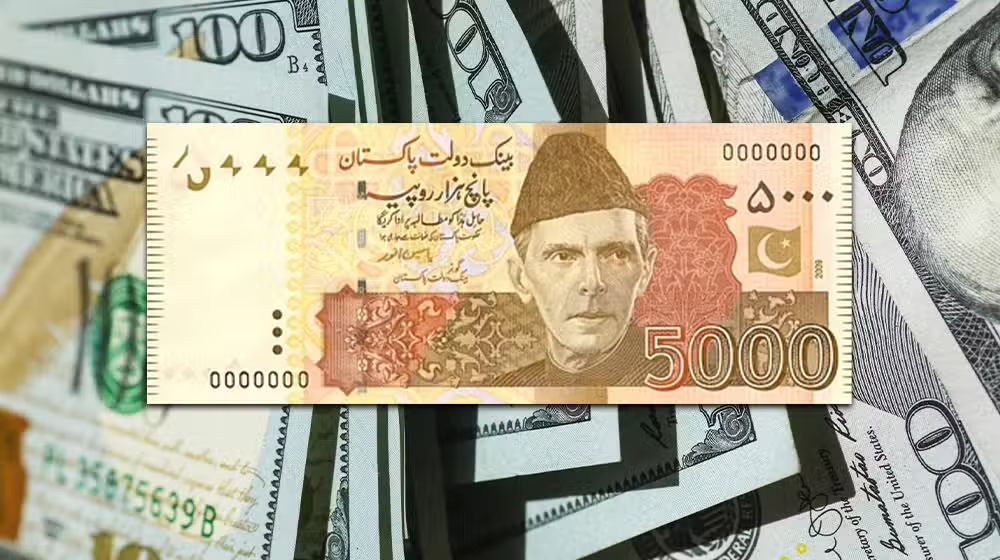
Pakistan’s Real Effective Exchange Rate (REER) remained above 107.9 in August 2026, indicating that the rupee continued to trade at a relatively strong level against the currencies of the country’s major trading partners.
According to the latest data from the State Bank of Pakistan (SBP), the REER index increased by 0.02 percent month-on-month in August.
The latest increase continues a broader upward movement in the index observed during recent months. Pakistan’s REER has gained around four index points from 103.11 recorded in February 2026.
The REER is a measure that compares a country’s currency against the currencies of its major trading partners while taking relative price levels into account. It is commonly used to assess changes in a currency’s external competitiveness.
A rising REER can indicate that a country’s currency has become stronger in real terms relative to trading partners. For exporters, changes in the REER can be important because they can affect the price competitiveness of goods sold in international markets.
Pakistan’s latest REER reading comes as exporters continue to operate in a competitive global environment. Higher production costs, international market conditions and exchange-rate movements can all influence the ability of Pakistani businesses to compete overseas.
The August increase was relatively small at 0.02 percent compared with the previous month, but the longer-term movement has been more noticeable. From February’s index level of 103.11, the REER has climbed by roughly four points.
The direction of the index is closely monitored by businesses, policymakers and economic analysts because exchange-rate competitiveness can influence exports, imports and the country’s external balance.
The REER differs from the nominal exchange rate because it takes into account the currencies of multiple trading partners as well as differences in price levels.
This means that movements in the REER can provide a broader picture of the rupee’s international purchasing and competitive position than looking at the rupee’s exchange rate against a single currency.
For Pakistan’s export sector, maintaining competitiveness remains an important consideration as manufacturers and exporters seek to sell goods in international markets.
A sustained rise in the REER can become relevant to exporters if domestic costs rise faster than those of competing economies or if the rupee strengthens in real terms against trading-partner currencies.
The August data therefore adds to the recent trend of a gradually increasing REER. The index has moved higher from 103.11 in February to above 107.9 in August.
The SBP’s REER data will continue to be monitored as Pakistan’s external sector develops during the 2026-27 financial year. Future movements will depend on exchange-rate changes, inflation differences and economic conditions in Pakistan and its major trading partners.