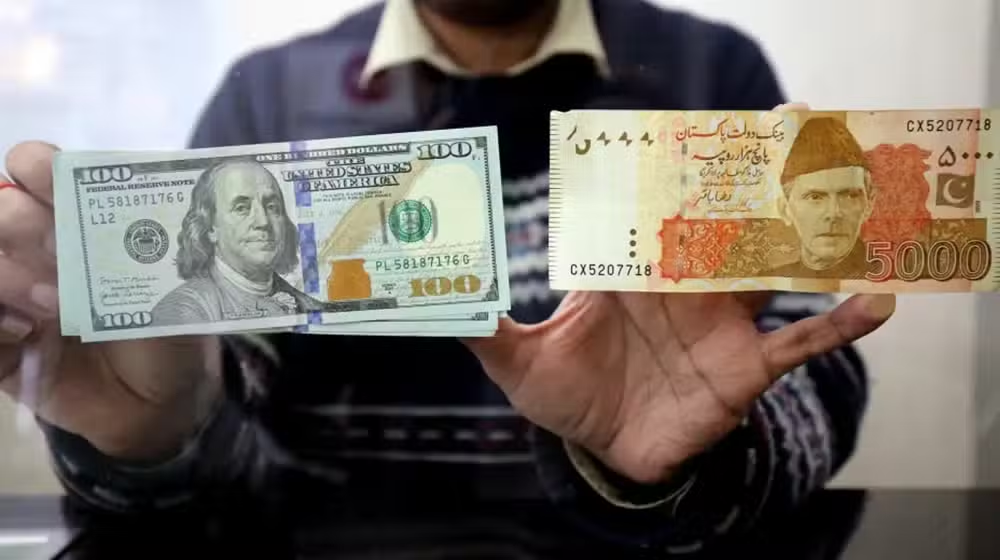
The Pakistani Rupee (PKR) continued its upward trajectory against the US Dollar (USD), closing at 278.97 in the latest trading session, marking a rare milestone as the currency touched the 278 level for the first time in nearly two years.
According to market data, the rupee has now posted gains against the US dollar for 139 consecutive trading days, reflecting sustained stability in the foreign exchange market. The latest movement represents a gain of three paisas in a single session, reinforcing the gradual strengthening trend seen in recent months.
The level of 278 per dollar was last observed between March and June 2024, a period when the currency briefly stabilized due to improved external inflows and policy measures linked to economic reforms. Since then, the rupee had generally traded above this threshold through 2025, largely due to import pressure and external financing challenges.
The recent return to the 278 range suggests that the currency has re-entered a previous stability zone after approximately two years of volatility and adjustment cycles. Market analysts often interpret such movements as signs of improving macroeconomic balance, especially when supported by controlled inflation, stable reserves, or improved remittance inflows.
While the rupee strengthened against the US dollar, it showed mixed performance against other major currencies during the same trading session. It remained largely stable against the UAE Dirham (AED) and the Saudi Riyal (SAR), indicating limited fluctuation in Gulf-linked exchange rates due to their dollar peg structure.
Currency traders note that exchange rate movements are influenced by multiple factors, including import demand, foreign exchange reserves, remittances, and broader economic sentiment. Even small gains in the rupee can signal improved confidence in the short-term outlook, though long-term stability depends on sustained economic performance.
The continued strengthening trend, if maintained, could help ease inflationary pressure by reducing the cost of imported goods. However, analysts also caution that exchange rates remain sensitive to global oil prices, external financing conditions, and domestic demand cycles.
As the rupee revisits its mid-2024 level, attention now turns to whether this stability can be sustained in the coming months amid evolving economic and global conditions.