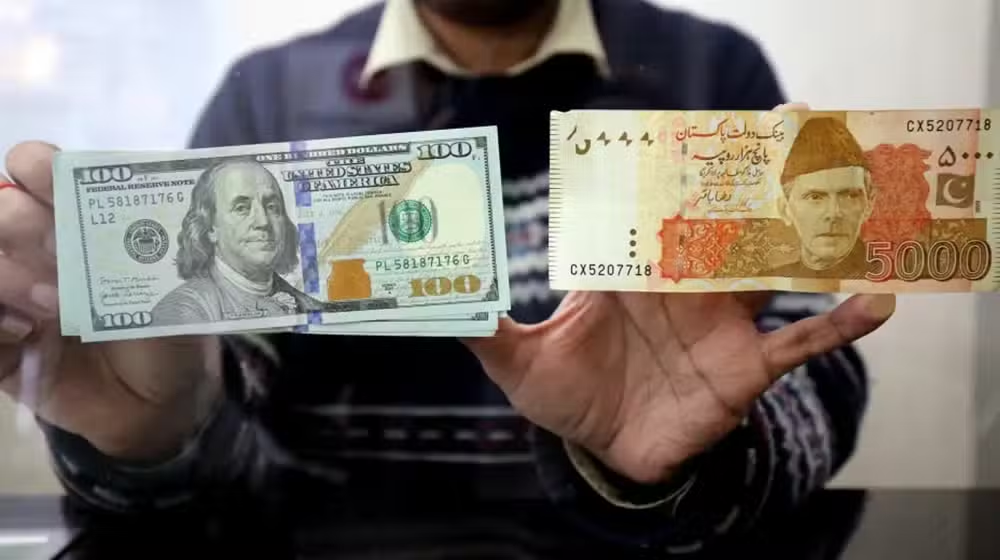
The Pakistani rupee continued its steady performance against the US dollar, closing at Rs276.97 in the interbank market on Monday. The local currency gained three paisas during the trading session, marking another day of gains against the greenback.
According to the reported exchange rate, the rupee has now closed stronger against the US dollar for 259 consecutive trading days. The latest closing level is particularly notable because the currency was last trading around the Rs276 mark in October 2023.
The rupee’s performance has drawn attention to developments in Pakistan’s foreign exchange market, where exchange rate stability remains important for businesses, importers, exporters, and consumers.
The latest movement also places the currency at a level not seen for almost three years, highlighting the sustained trend of relative stability in the interbank exchange market.
Pakistani Rupee Maintains Its Upward Momentum
The rupee closed at Rs276.97 against the US dollar after gaining three paisas on Monday. Although the daily movement was modest, it extended the reported streak of consecutive sessions in which the local currency closed stronger against the dollar.
Historical exchange rate figures show that the rupee was quoted at Rs276.90 on October 16, 2023, before moving to Rs276.83 on October 17. It subsequently weakened to Rs277.03 on October 18 and Rs280.29 on October 19.
These figures illustrate how quickly exchange rates can change in response to market conditions. The latest closing rate near Rs277 therefore represents a return to a level last observed in October 2023.
However, the exchange rate alone does not provide a complete picture of the rupee’s overall strength. Inflation, purchasing power, import costs, export competitiveness, and the availability of foreign currency are also important factors when assessing the broader performance of the national currency.
Why the Rupee-Dollar Exchange Rate Matters
The Pakistani rupee’s value against the US dollar has significant implications for the domestic economy. Pakistan relies on imports for a range of essential goods, including petroleum products, machinery, industrial inputs, and certain food commodities.
A relatively stable exchange rate can help businesses plan purchases and manage payments for imported goods. It can also reduce uncertainty for companies that have financial obligations denominated in foreign currencies.
Currency movements can influence inflation as well. When the rupee weakens, imported goods and raw materials may become more expensive in local currency terms, potentially increasing costs for businesses and consumers. Conversely, a stronger or more stable rupee can help limit some exchange-rate-related cost pressures.
Nevertheless, the extent to which currency stability reduces inflation depends on several other factors, including international commodity prices, domestic supply conditions, transportation expenses, and government taxes.
Exporters may also experience different effects from exchange rate movements. A stronger rupee can make Pakistani products more expensive for overseas buyers, while a weaker currency can increase the local-currency value of export earnings. The final impact depends on production costs, international demand, and the proportion of imported inputs used by exporters.
Historical Exchange Rates Highlight Market Changes
The reported interbank figures from October 2023 provide a useful comparison with the rupee’s latest performance.
On October 16, 2023, the dollar was quoted at Rs276.90 on a selling-rate basis. The rate declined slightly to Rs276.83 the following day before rising to Rs277.03 on October 18.
By October 19, the reported selling rate had increased to Rs280.29, reflecting a noticeable change over a short period.
These historical figures demonstrate that exchange rates can fluctuate even when the broader market appears relatively stable. They also underline the importance of distinguishing between buying rates, selling rates, and interbank closing rates when comparing currency data.
For accurate analysis, exchange rate comparisons should use consistent market conventions and clearly identified dates.
What the Rupee’s Stability Means for Pakistan
The rupee’s latest closing rate may provide some reassurance to businesses and market participants seeking greater predictability in foreign currency transactions. A prolonged period of relative exchange rate stability can make it easier for companies to estimate import costs, manage foreign payments, and prepare financial plans.
However, a sustained improvement in the currency’s performance depends on broader economic conditions. Foreign exchange reserves, export receipts, remittances, import demand, external debt payments, and investor confidence can all influence the supply and demand for dollars in Pakistan.
The rupee’s performance should therefore be considered alongside these indicators rather than treated as an independent measure of economic health.
For consumers, a stable exchange rate may help moderate imported cost pressures, but it does not automatically guarantee lower retail prices. Businesses may continue to face higher costs from other sources, while the effects of currency changes can take time to reach the market.
The Pakistani rupee’s close at Rs276.97 against the US dollar marks a notable exchange rate milestone compared with October 2023. Whether this performance continues will depend on developments in Pakistan’s foreign exchange market and the wider economic environment.