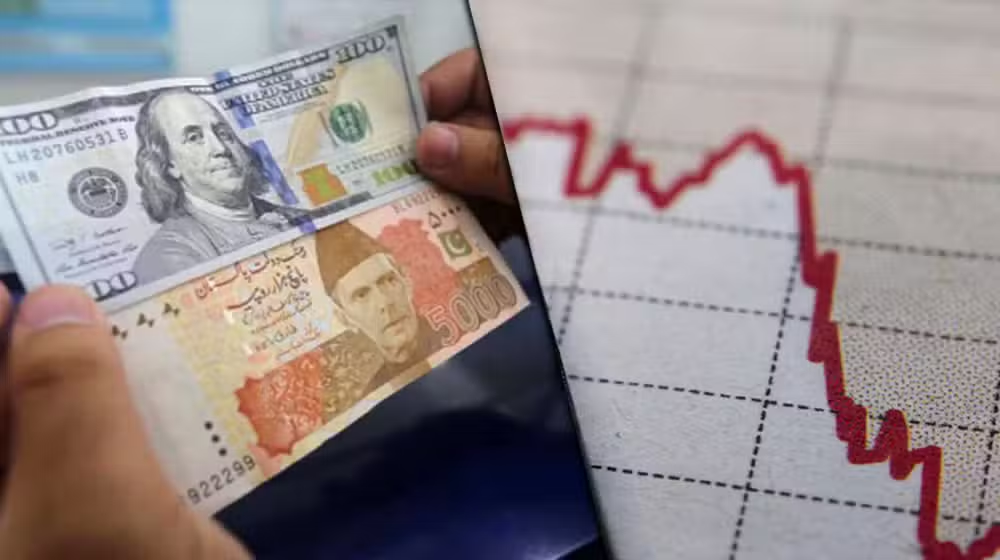
The Pakistani rupee continued its steady performance against the US dollar on Thursday, marking its 272nd consecutive trading day of gains or stability in the interbank market. The local currency closed at Rs. 276.76 against the dollar after gaining one paisa during the latest trading session.
The latest movement extends the rupee’s prolonged positive streak and highlights the relative stability it has maintained against the US currency over recent months. Although the daily change was small, the continued performance remains a point of interest for Pakistan’s financial markets and currency traders.
According to the reported exchange rate, the rupee appreciated by one paisa against the US dollar on Thursday. This brought the closing rate to Rs. 276.76, continuing the currency’s run of consecutive sessions in which it closed in positive territory.
Foreign exchange movements are closely monitored in Pakistan because the rupee-dollar rate can influence import costs, export earnings, inflation, and the country’s external payments. A relatively stable exchange rate can also help businesses plan transactions and manage the cost of international trade.
Pakistan relies on imports for several important products, including petroleum, machinery, industrial raw materials, and certain food commodities. Changes in the value of the rupee can affect the domestic cost of these goods, depending on international prices, taxes, and other expenses.
A stronger or stable rupee can help limit the increase in import costs when other factors remain unchanged. However, the final effect on consumer prices also depends on global commodity markets, domestic transportation expenses, government policies, and supply conditions.
Exporters also monitor currency movements because exchange rates affect the value of overseas earnings when converted into rupees. The impact varies across industries, depending on production costs, imported inputs, foreign currency obligations, and the markets in which businesses operate.
The rupee’s continued performance may also be relevant to businesses making payments in foreign currencies and Pakistanis sending or receiving money from abroad. Nevertheless, the interbank exchange rate can differ from rates offered by banks, exchange companies, and remittance providers.
Several factors can influence a currency’s performance, including foreign exchange reserves, demand for dollars, remittance inflows, export receipts, import payments, monetary policy, and investor confidence. These factors can change over time, meaning that a prolonged positive streak does not guarantee further appreciation.
The latest reported movement should therefore be viewed in the context of the broader economic environment rather than as an indication of a permanent trend. A one-paisa gain represents a limited daily change, even as the consecutive-day record attracts attention.
For businesses and consumers, the rupee-dollar exchange rate remains an important economic indicator. Continued stability may help improve planning and reduce uncertainty in foreign currency transactions, while sustained improvements in the wider economy depend on several additional factors.
Pakistan’s currency market will continue to be watched for changes in the interbank rate and the factors affecting demand and supply for foreign exchange. For now, the rupee has extended its reported streak to 272 consecutive trading days, closing at Rs. 276.76 against the US dollar on Thursday.