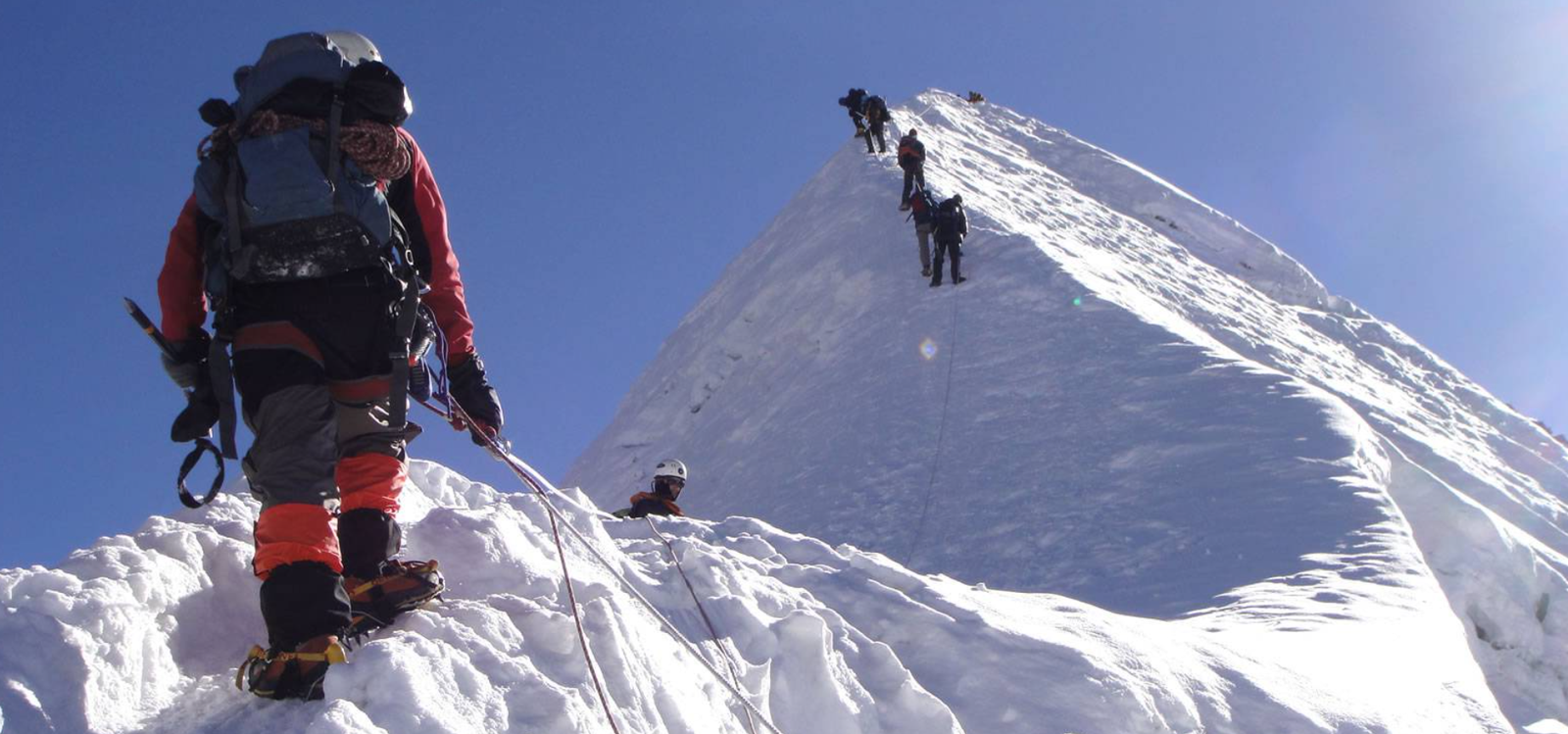
Nepal has long been known as the world’s ultimate mountaineering destination, drawing climbers to Everest and other towering Himalayan giants. But a growing number of adventurers are now shifting their attention from the famous 8,000-metre peaks to lesser-known summits that offer something rare in today’s commercialised climbing world — solitude, exploration, and the possibility of standing on a summit no one has reached before.
The Himalayan nation hosts eight of the world’s ten highest mountains, and commercial expeditions now dominate its most famous routes. Hundreds of climbers arrive each year, turning mountaineering into a major source of revenue for the country. But alongside the popular expeditions is a quieter movement toward unclimbed and remote peaks in the 6,000 to 7,000-metre range.
Nepal currently has 462 peaks officially open for climbing, and around one hundred of them have never been summited. For a new wave of mountaineers, the thrill lies not in altitude records but in pure exploration.
French expedition leader Paulo Grobel explains that once climbers look beyond the highest summits, a wide world of opportunity emerges. Peaks between 6,900 and 7,900 metres offer technical challenges and untouched terrain, giving climbers a sense of pioneering achievement that crowded routes can no longer provide.
This autumn, Nepal has already issued more than 1,300 climbing permits. While most applicants are heading toward the well-established mountains, small independent teams from France, Japan, Switzerland and elsewhere are venturing deep into the lesser-known regions to climb in true alpine style. These teams rely on minimal support, no fixed ropes and no supplementary oxygen — a self-sufficient and demanding form of ascent that requires skill and endurance.
Climbing experts say this shift is partly a response to concerns over overcrowding and sustainability on Everest and other famous peaks. The move toward remote summits also spreads tourism to villages that rarely benefit from the mainstream trekking economy.
Nepal is encouraging the trend by waiving climbing fees for dozens of mountains to boost interest in alternative regions. Mountaineering officials believe that as more trekkers and climbers explore these lesser-visited areas, infrastructure and local job opportunities will gradually expand.
For many climbers, these untouched summits represent the purest form of mountaineering — adventure without fanfare, and discovery without the crowds. As Nepali climber Vinayak Malla notes, access and logistics can be difficult, but the rewards are just as immense as the peaks themselves.
With so many unclimbed mountains waiting in the shadow of Everest, Nepal’s mountaineering future is no longer only about altitude records. For a new generation of alpinists, it is about exploration, self-reliance and writing the next chapter of Himalayan adventure.