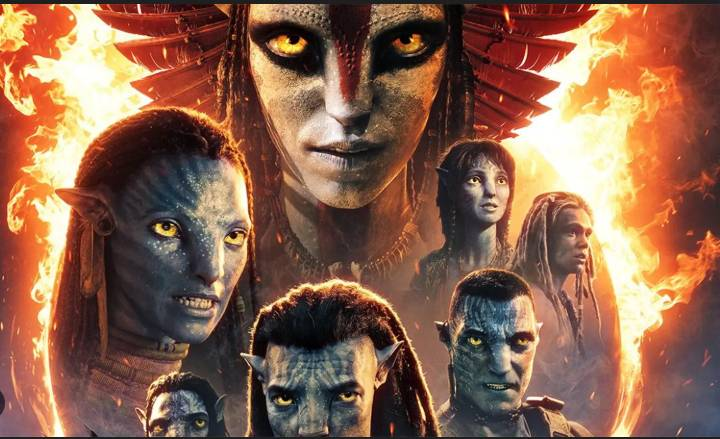
James Cameron is preparing to close the year with a major cinematic spectacle as Avatar: Fire and Ashes hits cinemas this month, aiming to sustain the momentum of one of the most commercially successful franchises in film history. The new chapter arrives 16 years after the original film reshaped the global box office and visual-effects technology, and three years after The Way of Water revived cinema audiences in the post-pandemic era.
Avatar: Fire and Ashes will roll out in major markets from December 17, strategically positioned ahead of the holiday season. As with its predecessors, the film promises immersive world-building, environmental themes, and emotional arcs that extend beyond visual spectacle. The first Avatar remains the highest-grossing film of all time with approximately 2.9 billion dollars globally, while the second installment earned around 2.3 billion dollars, marking its own success despite industry challenges.
The third film follows Jake Sully and Neytiri as they navigate grief and redefine their family dynamics on Pandora following the death of their eldest son. Their children, including Kiri, played by Sigourney Weaver, and the human teenager Spider, continue to wrestle with identity, belonging, and cultural conflict. Cameron has publicly linked these tensions to real-world narratives of migration and displacement, framing the story around themes that resonate beyond science fiction.
The introduction of a new antagonist adds further complexity. The Mangkwan, or Ash People, are a Na’vi clan whose volcanic devastation pushes them toward a life of survival through aggression. Led by Varang, portrayed by Oona Chaplin, the community represents a darker facet of Pandora, challenging previous depictions of the Na’vi as uniformly harmonious and morally centred.
Environmental storytelling remains central. The film depicts renewed conflict with the human Resources Development Administration, which seeks to exploit giant marine creatures for a high-value substance extracted from their brains. Cameron has said the original Avatar story was conceived as an environmental cautionary tale, and early commentary suggests Fire and Ashes continues that narrative with minimal subtlety.
Filming for the second and third Avatar films concluded years before the rise of generative artificial intelligence, and Cameron has clarified that the franchise does not use AI to replace actors. Instead, performance capture remains his preferred method, combining physical acting with digital enhancement to create the signature Na’vi aesthetic.
Initial critical reactions have been limited but optimistic. Early social media responses describe the film as another visually astonishing entry, although some viewers have questioned the familiarity of its story beats. Cameron has acknowledged criticism with trademark humour, noting that he continues to refine a small number of core ideas rather than reinvent them.
With two more installments planned later in the decade, Avatar: Fire and Ashes is expected to set narrative and commercial foundations for what remains an ambitious multi-film universe. Whether it matches the box-office dominance of its predecessors will depend not only on audience demand for spectacle, but on how deeply viewers connect with familiar themes presented in a new cinematic chapter.