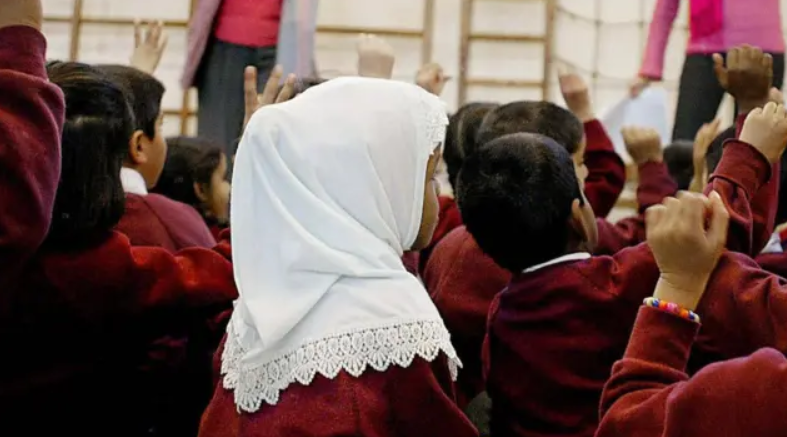
Austria’s parliament has approved a new law banning headscarves for girls under the age of 14 in schools, reigniting debate about religious freedom and discrimination. The legislation, passed by a large majority, restricts all forms of Islamic veiling in educational institutions and has drawn strong criticism from rights groups, Muslim community representatives and social integration experts.
The ban was proposed by Austria’s conservative-led government, which has been under pressure as anti-immigration sentiment continues to influence national politics. Officials defended the measure by claiming it is intended to protect young girls “from oppression.” However, critics argue that the law unfairly targets one religious group and risks deepening divisions within Austrian society.
This is not Austria’s first attempt at such a measure. A similar ban introduced in 2019 for primary school students was overturned by the constitutional court, which ruled it discriminatory. This time, the government insists the updated legislation complies with constitutional requirements, despite warnings from legal scholars and human rights advocates that it could again be viewed as singling out Muslim students.
Under the new law, girls younger than 14 are prohibited from wearing headscarves that “cover the head in accordance with Islamic traditions.” Only the Green Party opposed the bill during parliamentary debate. Several lawmakers echoed the government’s stance, framing the headscarf as a symbol of pressure placed on young girls. Integration Minister Claudia Plakolm argued that expecting girls to hide their bodies to avoid being “seen by men” is an act of coercion rather than a religious practice.
The ban covers hijabs, burqas and other Islamic veils, and it is set to take full effect at the start of the new academic year in September. A transitional awareness period beginning in February will introduce the rules to students, parents and educators without immediate penalties. After that, repeated violations may lead to fines between 150 and 800 euros for parents. Government estimates suggest that roughly 12,000 girls could be affected nationwide.
Human rights groups, including Amnesty International Austria, condemned the law as discriminatory and warned that it reinforces stereotypes against Muslim communities. Muslim organizations such as IGGOe expressed concern that the policy will marginalize students rather than support their well-being. Women’s rights advocates also highlighted that banning specific clothing still results in controlling what girls can or cannot wear, undermining the idea of personal autonomy.
Austria now joins countries like France, which enacted its own school-based restrictions on religious symbols in 2004. With the new law set to impact thousands of families, debate around identity, secularism and inclusion is expected to intensify in the months leading up to implementation.