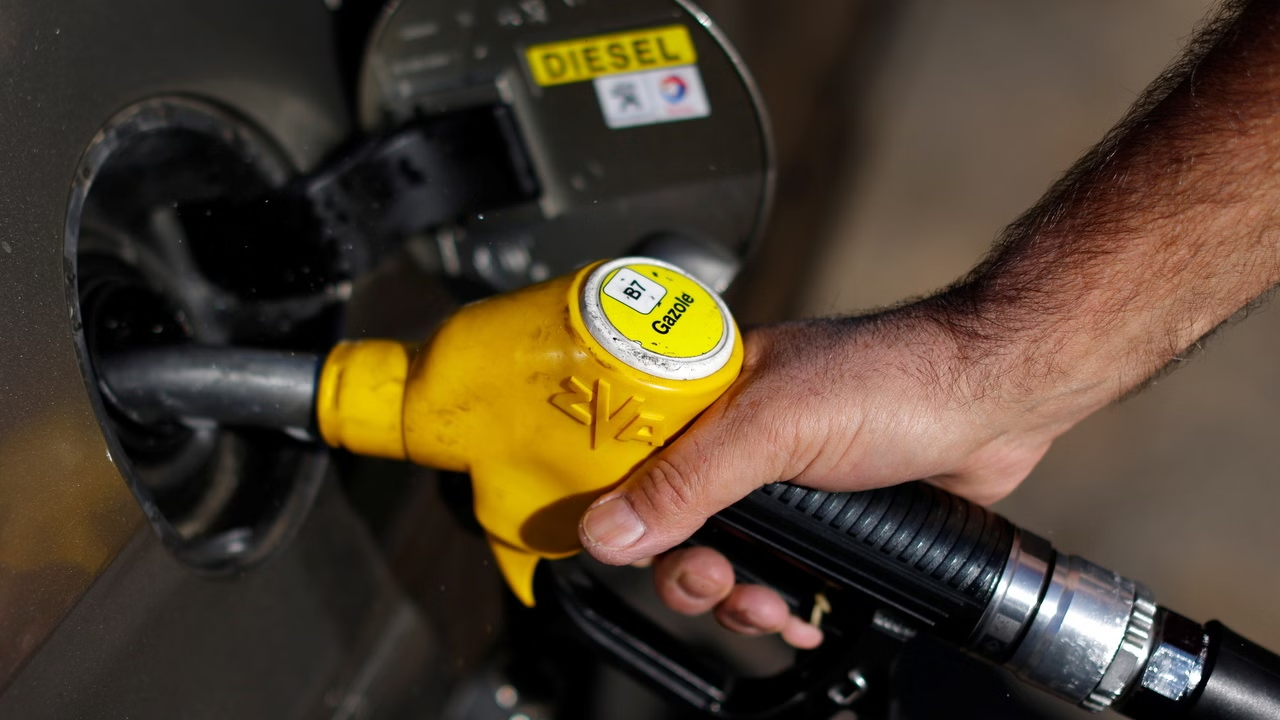
Diesel inventories at several oil marketing companies (OMCs) in Pakistan have fallen below the required 20-day supply benchmark, raising concerns about fuel availability as companies appear cautious about making fresh purchases.
Stock data shows that 12 of the country’s 20 oil marketing companies currently have diesel supplies below the mandated 20-day cover. The decline comes as industry players anticipate another possible adjustment in petroleum prices.
Several companies have seen their diesel stocks fall to critically low levels, with some holding less than a week of supply. The situation reflects growing uncertainty in the market as OMCs weigh the risk of buying fuel at current rates ahead of a potential price reduction.
My Petroleum has the lowest reported diesel inventory, with stocks equivalent to only one day of supply. Vital has two days of cover, while Echo holds around three days.
Taj has approximately six days of diesel stocks, followed by Euro with seven days. Hascol and Horizon each have around eight days of supply, according to the available inventory data.
GO has nine days of diesel cover, while Flow has 10 days. Allied Petroleum has 11 days of stocks, whereas ZMOPL and Hi-Tech each maintain approximately 16 days of supply.
The declining inventories are particularly significant because diesel is widely used across Pakistan’s transportation, agriculture, construction and industrial sectors. Any prolonged shortage could put additional pressure on fuel distribution networks.
However, not all oil marketing companies are facing the same level of inventory pressure. Eight OMCs continue to hold stocks above the 20-day benchmark.
Wafi has the highest diesel inventory among the companies listed, with around 31 days of supply. BE follows with 28 days, while Pakistan State Oil (PSO) has approximately 26 days of cover.
Parco, Gunvor and Jinn each have around 24 days of diesel stocks. Puma maintains approximately 23 days, while Attock has 22 days of supply.
Cnergyico, formerly known as Byco, has around 21 days of diesel stocks, keeping it just above the required benchmark.
The uneven inventory position highlights how differently oil marketing companies are responding to expectations surrounding petroleum prices. Companies with lower stocks appear to be limiting purchases, potentially seeking to avoid holding expensive inventory if prices are reduced.
Market participants are closely monitoring the government’s next petroleum price decision. Any reduction in diesel prices could encourage companies to delay procurement until revised rates come into effect.
At the same time, a prolonged decline in inventories could create supply management challenges if companies do not replenish stocks in time. Diesel demand typically remains important for freight transportation and other economic activities, making adequate availability essential for smooth supply chains.
The current inventory situation therefore puts the petroleum sector in a delicate position. While companies may benefit from avoiding losses on high-cost stocks if prices fall, excessively low inventories could increase operational and supply risks.
Industry stakeholders are expected to continue watching international oil prices, exchange rate movements, government decisions and domestic petroleum pricing mechanisms before making major procurement decisions.
The latest stock figures underline the uncertainty in Pakistan’s diesel market, with 12 OMCs currently below the 20-day supply benchmark while a smaller group continues to maintain relatively comfortable inventory levels.