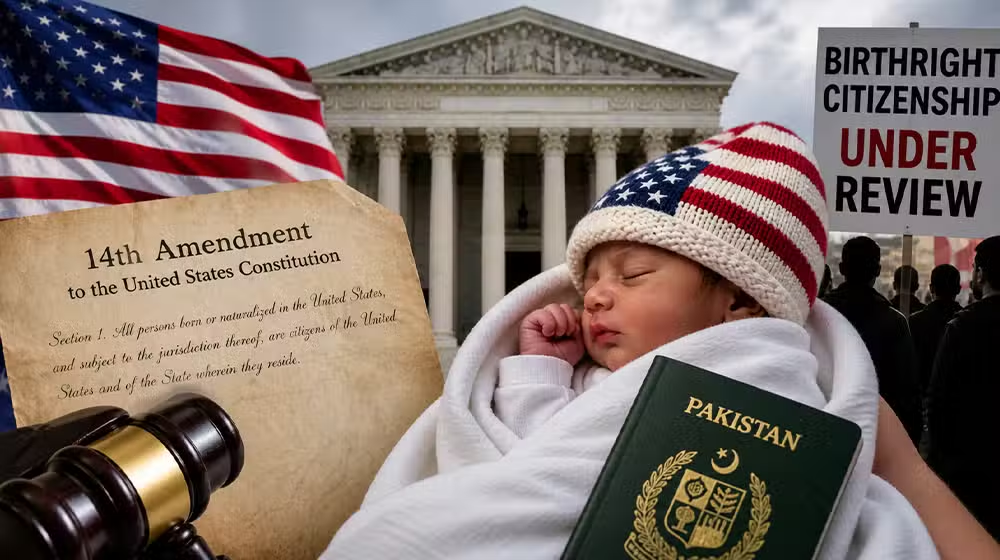
A proposed legal change in the United States could reshape one of the country’s most established constitutional principles, potentially affecting Pakistani families and other foreign nationals. Lawmakers are exploring measures that may end automatic citizenship for children born on US soil, a policy that has been in place for over a century.
The proposal comes in the form of a constitutional amendment introduced by a US senator. It seeks to revise the interpretation of the 14th Amendment, which currently guarantees citizenship to anyone born in the United States, regardless of their parents’ immigration status.
If implemented, this change would mark a significant shift in US immigration policy. For decades, birthright citizenship has ensured that children born in the country automatically receive US nationality, a provision that has impacted millions of families worldwide, including those from Pakistan.
Supporters of the amendment argue that the existing system has been misinterpreted and extended beyond its original intent. They claim the law was not designed to apply to individuals residing in the country without legal status and believe reforms are necessary to address what they describe as misuse of the policy.
Critics, however, warn that altering birthright citizenship could lead to complex legal and humanitarian challenges. Many legal experts point out that changing a constitutional provision is a lengthy and difficult process, requiring broad political consensus and approval at multiple levels.
For Pakistani families living in or planning to move to the United States, the proposal introduces uncertainty. The potential removal of automatic citizenship could affect future planning, immigration decisions, and long-term residency considerations.
It is important to note that the amendment is still in the proposal stage and has not yet been enacted into law. Any constitutional change would require significant legislative approval, making the timeline and outcome uncertain.
The development highlights an ongoing debate in US policy circles about immigration, national identity, and constitutional interpretation. As discussions continue, families around the world will be closely watching how this proposal evolves and what it could mean for future generations.