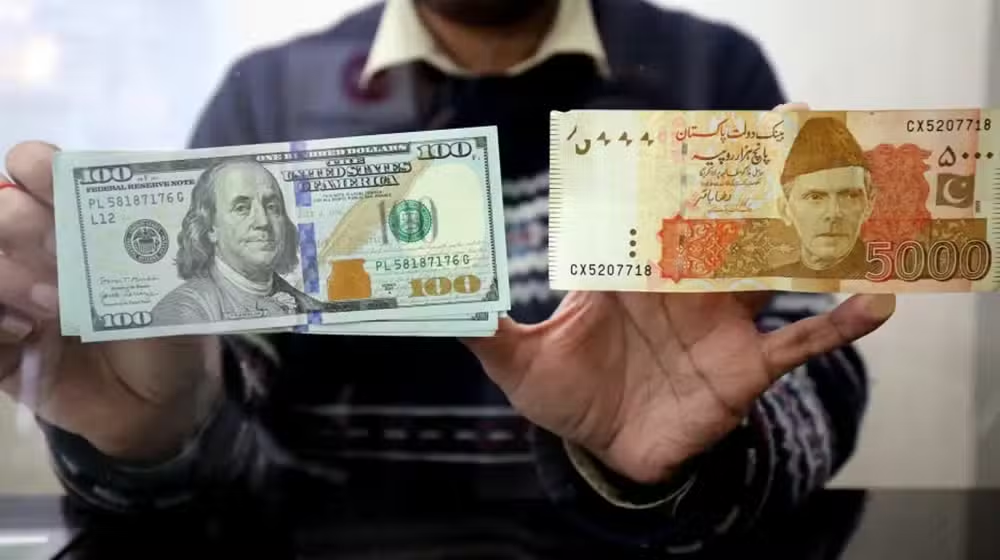
The Pakistani Rupee continued its upward trend against the US Dollar on Tuesday, marking its 144th consecutive day of gains. The local currency closed at 278.90, improving by one paisa and maintaining its long-running streak in the interbank market.
Despite this consistent performance against the dollar, the Pakistani Rupee faced pressure against several other major global currencies during the same trading session. This mixed movement highlights the complex dynamics of the foreign exchange market, where gains against one currency do not always translate into broader strength.
Market participants suggest that fluctuations against other currencies may be linked to global currency movements and shifting demand patterns in international trade. While the Pakistani Rupee remains stable against the US Dollar, broader market trends continue to influence its performance against other benchmarks.
The rupee, however, remained largely stable against key regional currencies, holding its ground against the UAE Dirham and the Saudi Riyal. This stability reflects controlled volatility in remittance-linked and trade-related currency pairs.
Analysts believe that the ongoing streak against the dollar is supported by balanced inflows and careful market management. However, the pressure seen against other currencies suggests that external factors, including global exchange rate shifts and economic developments, are still at play.
The dual trend underscores the importance of looking beyond a single currency pair when evaluating overall currency strength. For policymakers and investors, maintaining stability across a wider basket of currencies will remain a key focus.
As global financial conditions evolve, the Pakistani Rupee’s performance will likely continue to reflect both domestic economic policies and international market movements.