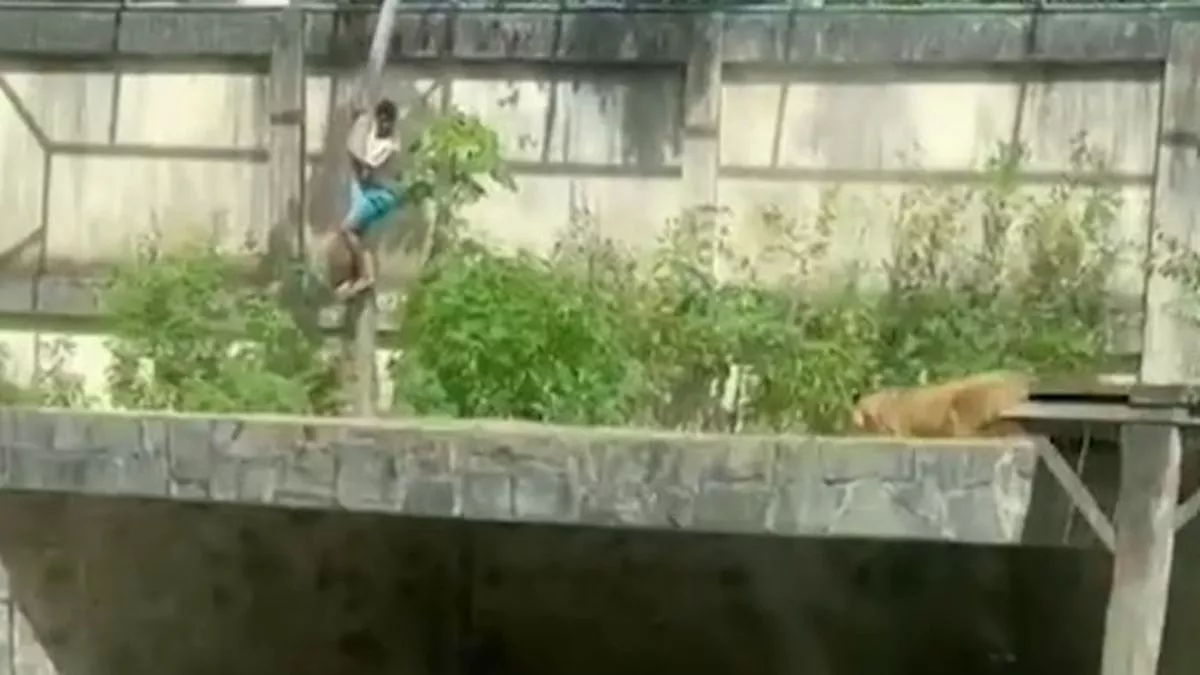
A tragic incident at the Arruda Camara Zoobotanical Park in Joao Pessoa, Brazil has ignited debate over zoo safety standards and the systemic neglect of vulnerable individuals with severe mental health conditions. Nineteen-year-old Gerson de Melo Machado was killed after scaling a high wall, crossing protective fencing, and entering a lion enclosure in full view of stunned visitors. Witnesses captured moments of the attack, revealing how quickly the situation unfolded once the animal engaged.
Authorities confirmed that Machado died from severe neck injuries caused by the lioness, identified as Leona. The park has remained closed while investigators assess the facility and review security protocols. According to state officials, current evidence indicates that the teen’s death may have been intentional or driven by psychological instability, rather than a spontaneous act of recklessness.
People familiar with Machado described his life as shaped by persistent mental health struggles and inadequate support. Local child protection workers stated that he moved repeatedly through institutions without receiving proper treatment. Accounts from relatives and former detention officials portray a young man who needed care but was repeatedly failed by the system. Some family members revealed he had expressed an obsessive fascination with lions and harbored unrealistic plans of traveling to Africa, reflecting deeper cognitive issues.
The enclosure itself has come under scrutiny, although park officials insist that the attack could not reasonably have been predicted. The zoo stated that Leona will not be euthanized, noting that her behavior was consistent with natural response to intrusion and did not indicate ongoing aggression. Experts have reiterated that no precautionary system can guarantee safety if someone is determined to bypass barriers.
The incident has revived a difficult dialogue in Brazil regarding mental health resources, early intervention and institutional responsibility. Observers argue that a young man marked by trauma, cognitive limitations and repeated confinement should not have been left without specialized assistance. Public advocates describe the tragedy as a humanitarian failure as much as a security lapse.
Local authorities are expected to review both zoo infrastructure and mental health case management. For many observers, the case reflects a wider pattern in which vulnerable individuals fall through gaps until an irreversible event occurs.