The United States and India have held what officials described as “productive trade talks,” with the White House confirming that Indian refiners have already begun reducing Russian oil imports by 50%. The move marks a significant development in Washington’s global effort to curb Moscow’s energy revenues amid the ongoing Russia-Ukraine conflict.
A senior White House official told Reuters on Thursday that Indian refiners are acting in line with commitments made during recent high-level talks. However, Indian industry sources have noted that the reduction may not yet be visible in trade data, as previously placed orders for November and December shipments are still being fulfilled.
According to reports, the Indian government has not formally instructed refiners to cut Russian oil imports, and no official statements have been released by India’s oil ministry or major state-owned refineries.
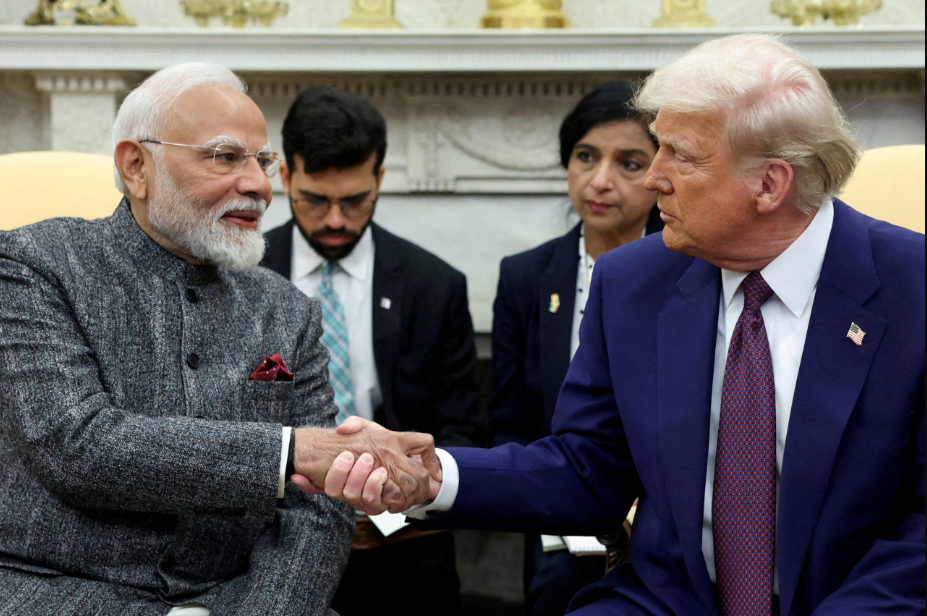
The update came shortly after U.S. President Donald Trump announced that Indian Prime Minister Narendra Modi had pledged to end India’s purchases of Russian oil. During a press conference at the White House, Trump said Modi’s commitment represents a major step toward economically isolating Moscow.
“I was not happy that India was buying oil,” Trump said. “He assured me today that they will not be buying oil from Russia. That’s a big step. Now we’re going to get China to do the same thing.”
India and China have been Russia’s largest oil customers since Western sanctions took effect following the 2022 invasion of Ukraine. In September, India imported roughly 1.62 million barrels of Russian crude per day, nearly one-third of its total oil demand.
Indian officials have long defended these purchases as crucial to maintaining energy security and affordability for a developing economy. However, Washington’s ongoing diplomatic and economic pressure appears to be influencing New Delhi’s energy strategy.
Analysts suggest that a full reduction of Russian imports could take time, given India’s long-term contracts and existing logistical arrangements. Trump himself acknowledged this, stating that the change would not happen “immediately,” but adding that “the process will be over soon.”
The U.S. administration has also linked trade policy to India’s energy decisions. Earlier this year, Washington imposed 50% tariffs on Indian exports, split into two rounds—25% following stalled trade negotiations, and an additional 25% tied to India’s continued oil purchases from Russia.
Indian officials have criticized the move as unfair, noting that other nations such as China and Turkey—also major buyers of Russian oil—have not faced similar trade penalties.
The announcement of Modi’s pledge came just days after Sergio Gor, Trump’s nominee for U.S. Ambassador to India, met with Modi in New Delhi to discuss trade, defense, and technology cooperation. Gor, a close Trump ally, is expected to play a key role in advancing the administration’s South Asia strategy.
As global oil dynamics continue to shift, the impact of India’s reduced reliance on Russian crude will be closely watched by both Western policymakers and global markets.